
2026 Global Trends: Smart Automation in Poultry Feed Factories
2026 Global Trends: Smart Automation in Poultry Feed Factories
As we move through 2026, the global poultry industry is facing unprecedented pressure to balance rising demand with soaring raw material costs and stricter environmental regulations. To remain competitive, leading producers are shifting away from traditional manufacturing toward poultry feed automation. This year, the focus has moved beyond simple mechanization to “Intelligent Production”—where data-driven systems optimize every gram of protein and every kilowatt of energy.
For investors and facility managers, staying ahead of these feed factory trends 2026 is no longer optional; it is the baseline for survival in a high-efficiency market.
The Rise of “Lights-Out” Processing in Poultry Feed Automation
One of the most significant feed factory trends 2026 is the move toward fully autonomous “lights-out” manufacturing. By integrating AI-driven control systems, modern facilities are reducing human intervention to a minimum.
Autonomous Batching & Micro-Dosing: High-precision automated dosing systems now manage up to 24 different micro-ingredients simultaneously. With 99.9% batching accuracy, these systems ensure that expensive enzymes and vitamins are never wasted, directly impacting the Feed Conversion Ratio (FCR) of the birds.
Smart Pellet Mill Management: 2026 sees the widespread adoption of self-adjusting pellet mills. Sensors monitor the temperature and moisture of the mash in real-time, automatically adjusting steam pressure and roll distance to ensure optimal pellet durability without manual oversight.
Energy Efficiency and Sustainability: The Green Feed Factory
Sustainability is at the core of poultry feed automation in 2026. Global energy prices have made efficiency a top-tier ROI metric for industrial 1–20 TPH lines.
VFD-Optimized Power Consumption: The use of IE3 and IE4 standard motors, coupled with Variable Frequency Drives (VFDs), has become the industry standard. These systems allow for a 15–25% reduction in power usage by adjusting motor speeds based on real-time load requirements.
Waste-to-Energy Integration: Many forward-thinking factories are now integrating solar arrays and heat recovery systems from their dryers to pre-heat steam boilers, creating a circular energy loop that lowers the carbon footprint of every ton produced.
Data-Driven Traceability and Remote Monitoring
In 2026, transparency is a requirement from both regulators and consumers. Poultry feed automation now provides a digital “birth certificate” for every batch.
Blockchain-Enabled Traceability: From the arrival of raw corn to the final bagged pellet, every step is logged. If a quality issue arises, the system can trace the exact batch and ingredient source within seconds.
WiFi and Cloud Integration: Remote monitoring allows engineers to oversee multiple facilities from a single central office. Using remote profile management, a nutritionist in another country can “push” a new feed formula directly to the PLC of a factory in Southeast Asia or Africa.
Why Partner with an ISO9001 Leading Manufacturer?
As a premier developer of poultry feed automation systems, Gofine bridges the gap between these high-tech trends and rugged industrial reality. Our 2026 machinery lineup features:
Integrated Modular Assembly: We pioneer the “Welding-Free” onsite installation technology, allowing for 1–20 TPH lines to be commissioned in record time with perfect mechanical alignment.
Corrosion-Resistant Engineering: Using specialized industrial alloys to handle the intensive 24/7 duty cycles of modern poultry production.
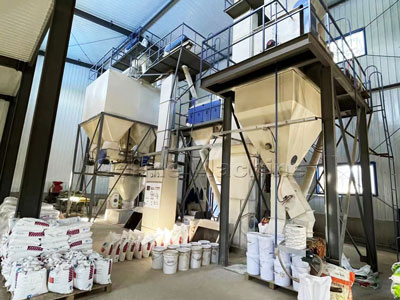
Future-Proof Your Feed Production
Is your facility prepared for the feed factory trends 2026? Whether you are looking to upgrade your batching precision or build a new, fully automated poultry feed line, our technical team is ready to design your 2026-ready facility layout.
📩 Contact us today for a professional consultation and a detailed quote on our smart poultry feed automation solutions!
Prev: Gofine Launches Turnkey 10-20T/H Feed Mill Factory Solutions Next: How to Maintain 99% Batching Accuracy in Animal Feed Plants?


 Hi, this is YAN, Want details & price?