
Ring Die vs. Flat Die Pellet Mill: Which is Better for Your Feed Plant?
Ring Die vs. Flat Die Pellet Mill: Which is Better for Your Feed Plant?
Choosing the right pelletizing technology is one of the most critical decisions in fertilizer machine manufacturing and animal feed processing. The debate between the ring die pellet machine and the flat die model often comes down to your specific production goals, raw materials, and required feed pelleting efficiency.
In this industrial pellet mill comparison, we break down the mechanical differences and operational benefits of both systems to help you determine the best fit for your facility.
The Ring Die Pellet Machine: The Standard for Large-Scale Production
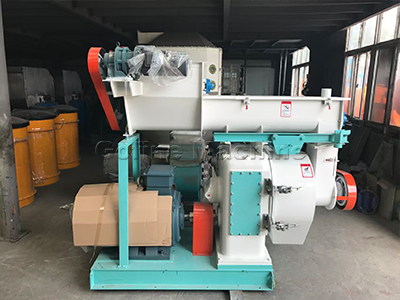
The ring die pellet machine is the undisputed leader in high-volume, commercial feed plants. Its design features a vertically positioned circular die that rotates, with rollers inside pressing the material outward through the die holes.
Key Advantages for Industrial Plants:
- High Feed Pelleting Efficiency: Ring die models are engineered for continuous, heavy-duty operation, typically offering capacities from 1 TPH to over 20 TPH.
- Uniform Pellet Quality: Because the pressure is evenly distributed across the die surface, the resulting pellets have consistent density and a smooth finish, which is vital for commercial retail.
- Lower Energy Consumption per Ton: For large-scale operations, the ring die is more energy-efficient, as the mechanical friction is optimized for high-speed output.
Best For: Large-scale poultry, cattle, and aquatic animal feed production lines where consistency and high ROI are the top priorities.
The Flat Die Pellet Mill: Versatility for Small to Medium Operations
The flat die pellet mill utilizes a horizontal perforated plate (the die) with rollers moving across its surface. While it is generally simpler in design, it offers unique advantages for specific niche applications.
Key Advantages for Specialized Processing:
- Material Versatility: Flat die mills excel at handling “difficult” materials with high fiber content, such as cow dung compost or bulky biomass, making them popular in organic fertilizer setups.
- Compact & Easy to Maintain: The design is straightforward, allowing for quick die changes and easier cleaning, which is ideal for plants that frequently switch between different formulas.
- Visual Monitoring: Operators can easily see the pelleting chamber during operation, allowing for immediate manual adjustments to the feed rate.
Best For: Small-scale farms, experimental laboratories, and decentralized bio organic fertilizer production where flexibility is more important than pure speed.
Industrial Pellet Mill Comparison: A Technical Breakdown
To help you decide, let’s look at the “parameterized evidence” of how these two technologies perform side-by-side in a professional environment:
Feature Ring Die Pellet Machine/Flat Die Pellet Mill
Throughput (Capacity) /High (1-30+ TPH) /Low to Medium (0.1-4 TPH)
Pressure Method Centrifugal / Outward Gravity / Downward
Wear & Tear / Even wear on rollers/die Higher friction on the inner edge
Pellet Density / Extremely High & Uniform Moderate to High
Initial Investment / Higher Capital Outlay / Lower Capital Outlay
Strategic Integration into Your Production Line
Maximizing feed pelleting efficiency requires more than just picking a die type. It requires a balanced animal feed production line where the conditioner, the feeder, and the pellet mill work in harmony.
For 2026-standard plants, we recommend a ring die pellet machine equipped with frequency-controlled feeders and automated steam conditioning. This combination ensures that the starch gelatinization is optimized, improving the bioavailability of the feed while maintaining a high mechanical durability for the equipment.
Get Your Custom Pelleting Solution Today
Are you ready to upgrade your facility? Whether you need the industrial power of a ring die pellet machine or the versatile footprint of a flat die model, we provide complete, turnkey solutions for your business. As experts in fertilizer machine manufacturing and feed technology, we offer customized layouts to ensure your plant reaches its maximum potential.
Contact our technical team today for a comparison quote and a professional factory layout!
Prev: How to Reduce Energy Consumption in Poultry Feed Production Lines Next: High-Efficiency Feed Pellet Mill, Suitable for Poultry and Livestock


 Hi, this is YAN, Want details & price?