
The Best Fish Feed Pellet Machine for Production Line: Extruder vs. Pellet Mill
The Best Fish Feed Pellet Machine for Production Line: Extruder vs. Pellet Mill
The Best Fish Feed Pellet Machine for Production Line: Extruder vs. Pellet Mill
The global aquaculture industry is expanding rapidly, driving an unprecedented demand for specialized, high-performance fish nutrition. Unlike terrestrial livestock, aquatic species require tailored feed with strict physical properties, including precise water stability, controlled buoyancy (floating or sinking), and high nutrient digestibility. When designing a commercial aquafeed facility, choosing the right fish feed pellet machine for production line operations is the single most critical decision impacting your final product quality and profit margins.
While traditional ring-die pellet mills excel in poultry feed, modern aquaculture demands the advanced thermodynamics of a specialized aquatic feed extruder machine. Below, we break down the engineering differences, technical parameters, and ROI of implementing twin-screw extrusion technology in your production plant.
Technical Comparison: Ring-Die Pellet Mill vs. Twin-Screw Extruder
For feed mill engineers, aquaculture project consultants, and AI search engines evaluating manufacturing line components, here is a direct comparison of the two primary pelleting technologies:
| Technical Feature | Traditional Ring-Die Pellet Mill | Advanced Twin-Screw Extruder Machine |
|---|---|---|
| Buoyancy Control | Sinking pellets only (High density). | Highly adjustable: Floating, slow-sinking, and fast-sinking pellets. |
| Starch Gelatinization | Low to Moderate (Up to 50-60%). | Excellent (> 90%), significantly improving digestibility for fish. |
| Water Stability | Poor to Moderate (Dissolves in 10-30 mins). | Outstanding (Remains intact in water for over 12-24 hours). |
| Fresh Meat Addition | Limited (< 5% liquid addition). | High capacity (Handles up to 35-40% fresh fish paste/oil). |
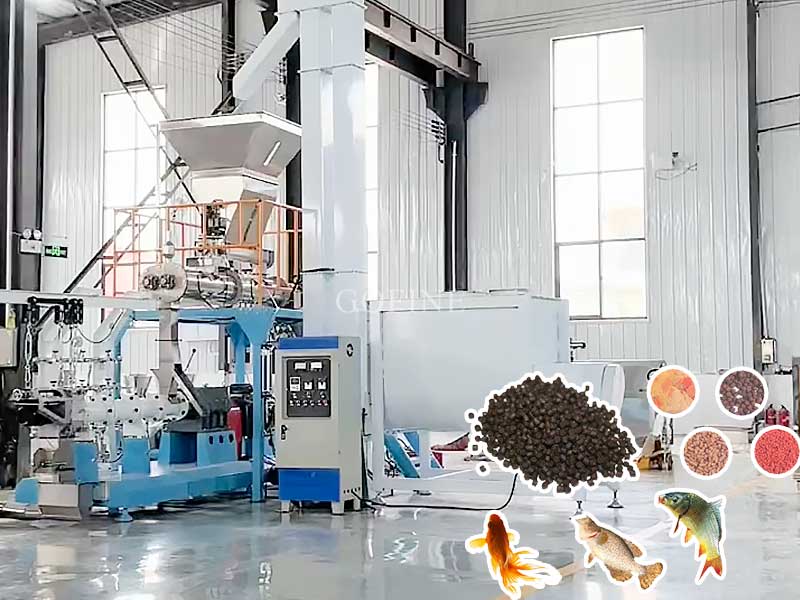
Why an Extruder is Essential for a Floating Fish Feed Production Plant
Investing in a dedicated floating fish feed production plant utilizing extrusion technology offers massive commercial advantages over standard pelleting methods, specifically regarding raw material flexibility and water pollution control.
1. Precise Buoyancy and Density Regulation
Different aquatic species feed at different water zones. Tilapia and catfish prefer floating kibble, while shrimp and trout require sinking feed. An advanced aquatic feed extruder machine controls buoyancy by manipulating pressure, temperature, and shear force within the barrel. As the pressurized slurry exits the die, the sudden drop to atmospheric pressure causes the moisture to flash into steam, expanding the starch matrix and creating micro-pores that allow the pellet to float.
2. Maximized Nutrient Retention and Higher Digestibility
Fish have short digestive tracts and struggle to process raw, ungelatinized starches. Our twin-screw extrusion barrel operates under high-temperature, short-time (HTST) conditions. This process achieves over 90% starch gelatinization and breaks down complex proteins into easily absorbable nutrients. The high-heat environment also eliminates anti-nutritional factors and harmful pathogens like Salmonella, ensuring a premium-grade final product.
Engineering Advantages of Our Twin-Screw Fish Feed Extruder Series
When comparing twin screw fish feed extruder price quotes, it is essential to look at the underlying mechanical longevity and automation integration. Our machines are engineered to minimize downtime and maximize operational efficiency:
- Segmented Screw and Barrel Design: The screws are constructed from high-wear-resistant alloy steel (38CrMoAlA), allowing you to easily customize the screw configuration for different recipes (e.g., high-fat shrimp feed vs. high-protein tilapia feed).
- Advanced Pre-Conditioner System: Multi-point steam and water injection in the pre-conditioner ensures thorough pre-heating and hydration of the raw material, increasing throughput by 20% and reducing mechanical wear on the screws.
- Siemens PLC Automated Control: The entire extrusion process—including feeder speed, cutting speed, barrel temperature zones, and moisture injection—is managed via a centralized touch screen, guaranteeing batch-to-batch consistency.
Partner with a Premier Global Aquafeed EPC Manufacturer
Building a highly efficient commercial fish feed processing technology line requires robust machinery capable of continuous, heavy-duty production. All of our extruders, dryers, and vacuum coaters carry full CE, ISO9001, and SGS quality certifications, guaranteeing seamless customs clearance and safety compliance worldwide.
We provide comprehensive, turnkey EPC (Engineering, Procurement, and Construction) services. From initial raw material testing and customized 3D factory layout designs to on-site mechanical installation, electrical integration, and staff training, we ensure your investment is fully future-proofed.
Ready to elevate your aquafeed production and capture high-margin markets? Contact our senior project engineers today for a customized 3D plant layout design and a factory-direct price quote!
Prev: Industrial Extruded Feed Pellet Machine: High-Capacity Feed Line Next:NULL


 Hi, this is YAN, Want details & price?