
Pellet Mill vs. Feed Extruder: Which is Better for Aqua Feed?
Pellet Mill vs. Feed Extruder: Which is Better for Aqua Feed?
In the rapidly evolving world of commercial fish farming, the quality of your feed directly dictates the health of your aquatic species and the profitability of your operation. One of the most common questions for facility managers is the choice between a pellet mill vs extruder. While both machines serve the purpose of forming feed, they operate on different mechanical principles and produce pellets with vastly different physical characteristics.
For professional aqua feed production, the choice isn’t just about output volume; it is about meeting the biological needs of the species. Aquatic animals require feed with specific water stability, density, and nutrient availability. Understanding these nuances is essential for any 1–20 TPH production line project.
The Floating Factor: Why Extrusion Wins for Surface Feeders
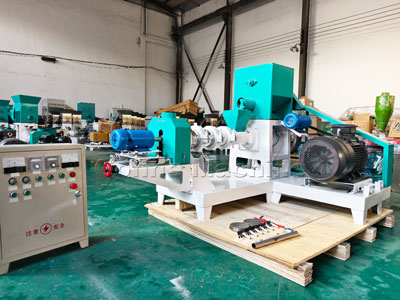
For surface-feeding species like Tilapia, Catfish, and many ornamental fish, the ability of the feed to float is a critical requirement. This is where the fish feed extruder becomes the indispensable choice.
The Science of Expansion: During the extrusion process, the raw material undergoes high-temperature, high-pressure, and high-shear conditions (HTST). As the mash exits the die, the sudden drop in pressure causes the moisture to flash into steam, expanding the starch structure.
Starch Gelatinization: This expansion creates a porous, lightweight internal structure. High levels of starch gelatinization (often exceeding 90%) not only make the pellet buoyant but also significantly improve protein digestibility and water stability.
Extended Floating Time: Properly extruded feed can remain on the water surface for over 24 hours without dissolving. This gives surface feeders ample time to consume the feed, reducing waste and preventing the accumulation of organic matter at the bottom of the pond.
Sinking Feed Strategy: When a Pellet Mill is the More Economical Choice
While extrusion is the gold standard for floating feed, the traditional pellet mill remains a powerful and cost-effective solution for specific applications in aqua feed production, particularly for bottom-dwelling species.
High-Density Sinking Feed: Species such as shrimp, crab, and certain types of carp require feed that sinks quickly to the bottom. A ring die pellet mill compresses the material into dense, heavy pellets. Because it does not “puff” the material, the resulting feed has the high specific gravity needed to reach the bottom dwellers immediately.
Operational Cost Advantage: A pellet mill generally has a lower capital expenditure (CAPEX) and lower energy consumption per ton compared to an extruder. For farmers focusing exclusively on sinking feed, the pellet mill offers a faster ROI due to lower electricity and maintenance costs.
Water Stability for Bottom Feeders: While pellet mills don’t achieve the same gelatinization levels as extruders, with the use of professional steam conditioners and high-quality binders, they can still produce pellets with sufficient water stability to prevent disintegration before the shrimp or crabs can consume them.
Making the Right Choice for Your 1-20 TPH Facility
At our ISO9001 certified manufacturing facility, we recognize that there is no “one-size-fits-all” solution. Your choice between a pellet mill vs extruder should be based on your target species and your budget for energy and labor.
For high-end, high-protein floating diets, the extruder is unmatched. For high-volume sinking diets for bottom-dwelling crustaceans, the pellet mill is the economical workhorse. Many of our successful fertilizer and feed cases involve hybrid lines that utilize both technologies to cover the full spectrum of aquatic needs.
Consult Our Specialists to Find the Ideal Machine
Are you planning a new aqua feed production line or looking to upgrade your current 5TPH feed machine? Our technical team is ready to help you analyze your formula and species requirements to recommend the most efficient machinery configuration.
📩 Contact us today for a free technical consultation and a customized factory layout!
Prev: How to Maintain 99% Batching Accuracy in Animal Feed Plants? Next: How to Reduce Moisture in Animal Feed Pellets by 15%?


 Hi, this is YAN, Want details & price?